Healthy trees can make any yard more attractive and comfortable. They provide shade, add privacy, support wildlife, and can make outdoor spaces feel more peaceful. Trees can also become important parts of a property for many years, so regular care is worth the effort.
Each season brings different needs. Spring is a good time to check new growth, summer calls for careful watering, fall is useful for cleanup, and winter is a good time to inspect tree structure. A steady routine can help trees stay strong through changing weather.
Inspect Trees Carefully in Spring
Spring is one of the best times to look closely at your trees. New leaves and buds make it easier to see which branches are healthy and which ones may have been damaged during winter.
Walk around each tree and check the trunk, branches, and soil. Look for broken limbs, cracks, loose bark, or branches that stayed bare while the rest of the tree started growing. These signs may point to damage that needs attention.
Also look for branches that rub against each other. Repeated rubbing can damage bark and create weak areas. If two branches are growing into each other, a small amount of careful pruning may help.
Pay attention to the shape of the tree as well. If one side has very little growth, there may be a problem with the roots, soil, or branches. A tree does not need to look perfectly even, but sudden changes deserve a closer look.
Spring is also a good time to remove debris around the base. Leaves, broken sticks, and other buildup can make it harder to inspect the trunk and soil. Keeping the area clear can help you notice problems earlier.
Prune Dead and Damaged Branches
Pruning can support healthy growth when it is done correctly. Removing dead, broken, or badly damaged branches can improve the tree’s structure and reduce some safety risks.
Small branches may be easy to remove with clean hand tools. Larger branches can be heavy and dangerous, especially if they are high above the ground. These jobs are better left to a trained tree professional.
Avoid cutting too many healthy branches at one time. Leaves help the tree make energy, so heavy pruning can weaken the tree. The goal should be to remove problem areas, not to change the whole shape without a reason.
Timing also matters. Some trees respond better to pruning during winter, while others may need pruning at a different time of year. If you are unsure, learn about the type of tree before making large cuts.
Never prune branches near power lines on your own. Even if a branch looks easy to reach, working close to electrical lines can be extremely dangerous. Call the proper utility company or a qualified tree professional instead.
Water Trees Based on Their Needs
Watering is one of the most important parts of tree care, especially during dry weather. However, trees do not all need the same amount of water.
Young trees usually need more regular watering because their roots are still growing. Older trees may have deeper root systems and can often handle short dry periods better.
Before watering, check the soil around the tree. If the ground is already moist, adding more water may not be helpful. Too much water can create problems just like too little water.
Slow, deep watering is often better than giving a small amount every day. The goal is to let moisture move deeper into the soil so the roots can reach it.
Do not pour all the water right against the trunk. Water the wider root area instead. Many tree roots spread much farther from the trunk than people expect.
During hot weather, watch for signs such as curling leaves, dry soil, or early leaf drop. These may show that the tree needs more water. At the same time, soft soil or standing water may point to poor drainage.
Use Mulch the Right Way
Mulch can be very useful for trees when it is applied correctly. It helps the soil hold moisture, reduces weeds, and protects roots from strong heat or sudden temperature changes.
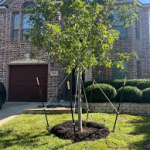
Spread mulch in a wide circle around the tree. Wood chips and similar materials are common choices because they slowly break down and add organic matter to the soil.
Keep mulch away from the trunk. Piling it high against the bark can trap moisture and create conditions that may lead to decay or other problems.
A wide, moderate layer is usually better than a deep pile. The mulch should protect the root area without covering the trunk.
Mulch can also reduce damage from lawn equipment. Mowers and string trimmers can cut bark when they get too close to the tree. A clear mulch ring creates some space between the trunk and lawn work.
Check the mulch during the year. Rain, wind, and yard work can move it around. Add a small amount when needed, but do not keep piling new layers on top of old ones.
Watch for Pests and Tree Disease
Spring and summer often bring more insects and plant disease. Some insects are harmless, but others may damage leaves, bark, branches, or roots.
Look for unusual signs such as holes in leaves, sticky areas, dark spots, large groups of insects, or branches that begin dying without a clear reason. Early leaf drop can also be a warning sign.
Do not panic if you see a few damaged leaves. Trees live outdoors and will often have some insect activity. The key is to notice changes that are sudden, widespread, or getting worse.
Homeowners who want to learn more about tree care may come across resources such as tree removal Marietta while researching seasonal maintenance and professional tree services.
Avoid using strong sprays or chemicals before you know what the problem is. The wrong treatment may not help and could harm insects that are useful to the yard.
If several branches are dying or the tree shows major changes, consider having it inspected. A trained professional may be able to identify problems that are difficult to recognize from the ground.
Protect Trees During Summer Heat
Summer can be one of the hardest seasons for young trees. Hot weather, dry soil, and strong sun can place extra stress on leaves and roots.
Newly planted trees are often at greater risk because their root systems have not spread very far. They may need more careful watering during long periods without rain.
Deep watering can help the soil stay moist for longer. Try to avoid very light watering that only wets the top layer of soil.
Keep weeds and thick grass away from the base of young trees. These plants compete with tree roots for water and nutrients.
Check the mulch during hot periods too. A proper layer can help protect the soil from drying out too quickly.
Avoid heavy pruning during extreme heat unless there is an urgent safety problem. Removing too much healthy growth can add more stress when the tree is already dealing with high temperatures.
Also look for sun damage on young trunks. In some cases, strong sun can damage exposed bark. A professional can advise whether extra protection is needed for a certain species.
Prepare Trees for Fall
Fall is a useful time to prepare trees for colder weather. It is also a good season to check whether summer heat caused any lasting damage.
Look for weak, broken, or dead branches before winter storms arrive. Snow, ice, and strong wind can put extra pressure on damaged limbs.
Remove heavy piles of wet leaves from around young trunks. Thick leaf buildup can trap moisture and make it harder to inspect the base of the tree.
Fall can also be a good planting season for certain types of trees, depending on the local climate. Cooler weather may reduce stress while the roots begin to settle into the soil.
Newly planted trees still need water. If fall is dry, continue watering until cold weather becomes stronger.
Avoid adding large amounts of fertilizer without knowing whether it is needed. More fertilizer does not always mean better growth. Too much can cause weak growth or other problems.
Fall is also a good time to check stakes on young trees. If a stake or tie is too tight, it can damage the trunk as the tree grows.
Clean Up Leaves Without Hurting Roots
Fall cleanup is important, but it should be done carefully around trees. Many roots are closer to the surface than homeowners realize.
Raking leaves is usually fine, but avoid digging deeply near the trunk. Sharp tools can damage roots and create stress for the tree.
Heavy equipment can also harm roots by pressing down the soil. Try not to drive or park close to the base of mature trees.
Leaves can be collected for compost or chopped into smaller pieces with a mower in open lawn areas. Some organic material can be useful in the yard when it is handled correctly.
Check the soil level while you clean. Do not pile extra soil around the trunk because this can affect the bark and roots.
Tree roots need both moisture and air. Changing the soil level too much can make it harder for roots to function properly.
Also keep storage items away from the trunk. Firewood, garden tools, or other objects can trap moisture and make inspections more difficult.
Check Tree Structure in Winter
Winter can make tree structure easier to see, especially for trees that lose their leaves.
Stand back and look at the full shape of the tree. Check for crossed branches, large cracks, broken limbs, or sections that look weak.
Look at branches that hang over roofs, driveways, walkways, or other areas where people spend time. A damaged branch may become more dangerous during wind, snow, or ice.
Inspect trees again after strong winter storms. Weather can create fresh cracks or cause branches to split without falling right away.
Never stand under a damaged branch while trying to inspect it. A limb can break suddenly even if it still looks partly attached.
Winter can be a good time for pruning some types of trees because growth is slower. However, this does not apply to every species, so check before doing major work.
Cold weather also gives homeowners a chance to look for trunk damage that may be hidden by leaves during other seasons.
Protect Young Trees in Cold Weather
Young trees may need extra care during winter because their roots and bark are still developing.
If the fall season has been dry, make sure the tree receives enough water before the ground becomes too cold. Dry roots can struggle during winter.
A proper mulch layer can help reduce sudden changes in soil temperature. Keep it spread around the root area rather than piled against the trunk.
Animals may also damage young trees by chewing bark. Tree guards may provide protection in some areas, but they should be checked often.
A guard that becomes too tight can harm the trunk as the tree grows. Remove or adjust it when needed.
Snow can sometimes bend young branches. If snow is light and easy to brush away, use very gentle movement. Avoid shaking frozen branches because they may snap.
Know When Professional Help Is Needed
Many tree care tasks can be handled as part of normal yard work. However, some problems are too dangerous or complex for homeowners to manage alone.
Large branches, storm damage, tall trees, and power line work should usually be handled by trained professionals. These jobs require special tools and safety knowledge.
Seek help if you notice major trunk cracks, large dead branches, sudden leaning, roots lifting from the ground, or large sections of the tree dying.
A professional may also be useful when a tree shows signs of disease that are difficult to identify. The earlier a serious problem is found, the more options may be available.
Before hiring a tree service, ask about experience and insurance. Get a clear explanation of the work and a written estimate when possible.
Conclusion: Keep Trees Healthy Through Every Season
Healthy trees depend on steady care throughout the year. Watering, mulch, careful pruning, seasonal inspections, and basic cleanup can all help trees stay stronger.
Start by walking around your property and looking at each tree. A few minutes of seasonal care can help create a greener, safer, and more attractive outdoor space that continues to grow for years.
If you’d like to learn more, check out more articles on our blog.